
The Planning Problem
Many people approach retirement with substantial savings but no clear income plan.
They may know what is in their IRA, 401(k), 403(b), brokerage account, pension, or Social Security estimate. But they may not know:
how much income they can safely draw;
which accounts should be used first;
how taxes may change later in retirement;
how RMDs may affect income and Medicare premiums;
how survivor status could change the plan;
whether spending goals, care costs, and legacy wishes are coordinated.
The question is not simply, “Have I saved enough?”
The better question is:
Can my assets support the life I want, in a tax-aware way, for as long as I may need them?

Why Income and Taxes Must Be Planned Together
Retirement income and taxes are inseparable.
Withdrawals from retirement accounts, Social Security taxation, pensions, annuities, Roth accounts, capital gains, charitable giving, Medicare surcharges, asset sales, and RMDs can all affect the amount of income available to support your life.
A strategy that looks sensible before taxes may feel very different after taxes.
That is why income planning should not be treated separately from tax planning. The goal is to understand how the pieces fit together before decisions become urgent.
The Longevity Strategies Approach
The Longevity Strategies process begins with a free Self-Check and, when appropriate, a guided Longevity Readiness Assessment™.
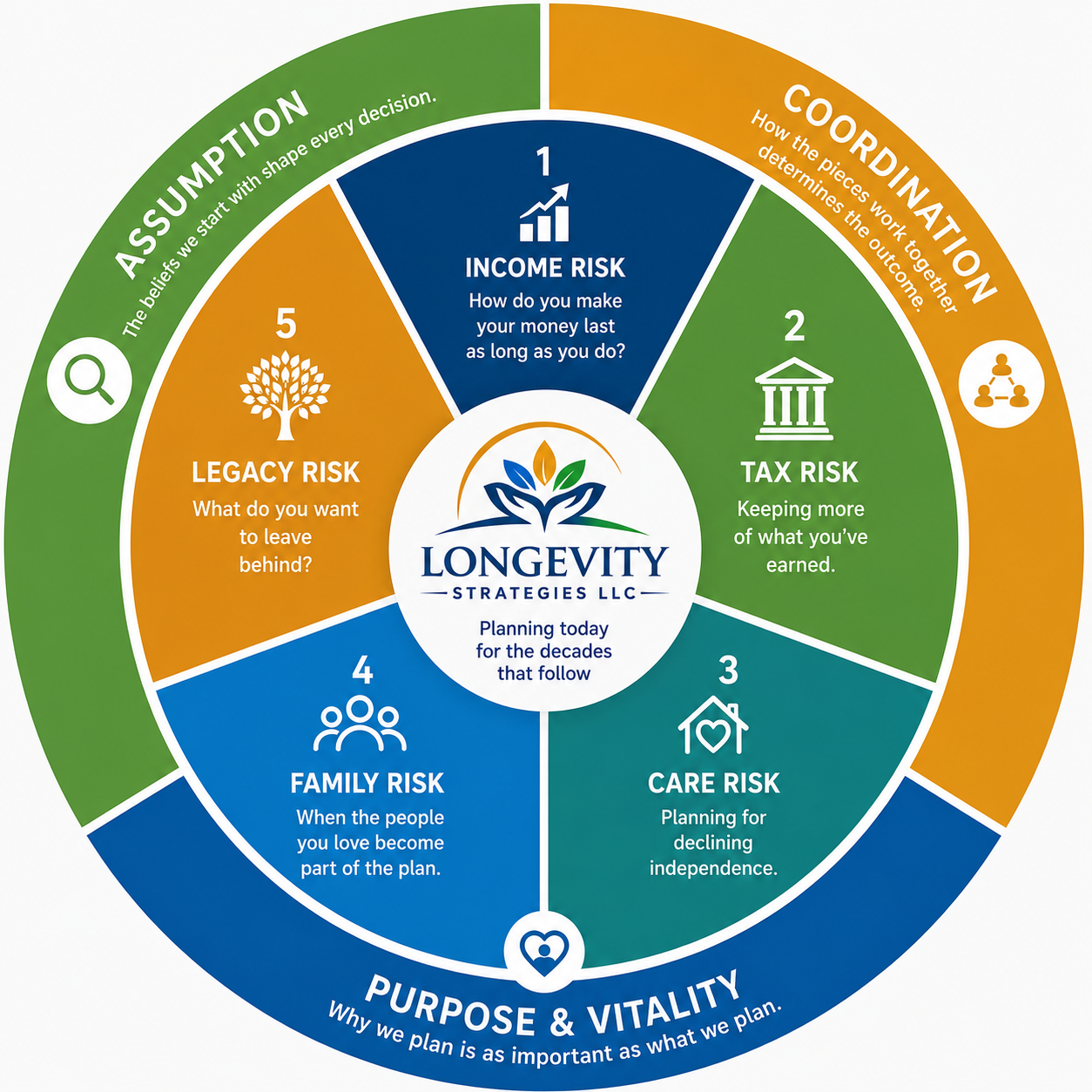
The Assessment looks at income and taxes as part of a broader long-life planning framework:
Income Security — Will your money support the life you want?
Tax Efficiency — Are taxes being anticipated and managed over time?
Care Planning — Could health or care costs disrupt the income plan?
Family & Support Preparedness — Would others know what to do if your role changed?
Legacy Preservation — Will assets, beneficiaries, documents, and wishes work together?
The Assessment does not produce recommendations. It produces a preliminary score, identifies possible planning gaps, and helps decide whether a paid Longevity Risk Audit or Longevity Blueprint may be useful.

This Page Is For You If
This page may be especially relevant if you are:
within 10 years of retirement;
recently retired;
an executive or professional with significant retirement savings;
a business owner planning for transition or sale;
holding substantial assets in an IRA, 401(k), 403(b), or brokerage account;
unsure when to claim Social Security;
concerned about RMDs, Roth conversions, or Medicare surcharges;
supporting adult children or aging parents;
worried about market risk, inflation, taxes, or outliving assets;
unsure whether your income plan, tax plan, care plan, and legacy plan fit together.

Common Questions
Do I have enough to retire?
That is often the first question. But it leads to others: enough for what lifestyle, over what time period, with what tax exposure, and under what assumptions?
Which accounts should I use first?
The answer may depend on taxes, income needs, investment risk, RMDs, estate goals, charitable intent, and other assets.
Should I be worried about taxes in retirement?
Taxes can become more complicated, not less, as retirement income begins. RMDs, Social Security taxation, Medicare premiums, asset sales, and survivor status can all matter.
Is this a tax-planning service?^
The free Assessment is educational and preliminary. It is not a tax opinion or tax advice. If deeper planning is appropriate, tax issues may be addressed with your tax professional.
^Neither Longevity Strategies, LLC nor its associates are in the business of offering tax, legal, or accounting advice. Please consult your own tax, legal, or accounting professional before making any decisions.

The Next Step
Before you decide what kind of plan you need, start by identifying which risks deserve attention.
The Longevity Readiness Self-Check is a short educational tool that helps you consider whether your income, taxes, care planning, family preparedness, and legacy are ready for a longer life.
Start with the Self-Check. If your answers suggest that a guided review may be useful, the next step is a brief Fit & Readiness Call.