
The Planning Problem
Many families avoid care planning until a crisis forces decisions.
By then, choices may be limited. Family members may disagree. One person may carry most of the burden. Legal authority may be unclear. Costs may arrive before a funding plan exists.
A strong care plan asks difficult questions before stress makes them harder:
Where would you want care if your health changed?
How would care be paid for?
Who would have authority to make financial or medical decisions?
Who would coordinate care, transportation, housing, bills, and communication?
What happens if one child, spouse, partner, sibling, or friend carries most of the burden?
What happens if several people are expected to agree and cannot?
The goal is not to predict the future. The goal is to reduce confusion, preserve options, and protect relationships.

Care Planning Is Family Planning
Care needs rarely affect just one person.
A change in health can affect a spouse, partner, adult children, siblings, friends, caregivers, business partners, and other people who depend on you. It can also affect income, taxes, housing, estate plans, insurance, and family relationships.
In families with several children, care planning should address not only who can help, but what happens to sibling relationships if one person does most of the work or if everyone shares responsibility but cannot agree.
In households without children, care planning may require a different kind of support system: trusted friends, siblings, nieces, nephews, professional fiduciaries, care managers, attorneys, or other formal helpers.
Every household is different. The questions are the same. The answers depend on your real life.
The Longevity Strategies Approach
The Longevity Strategies process begins with a free Self-Check and, when appropriate, a guided Longevity Readiness Assessment™.
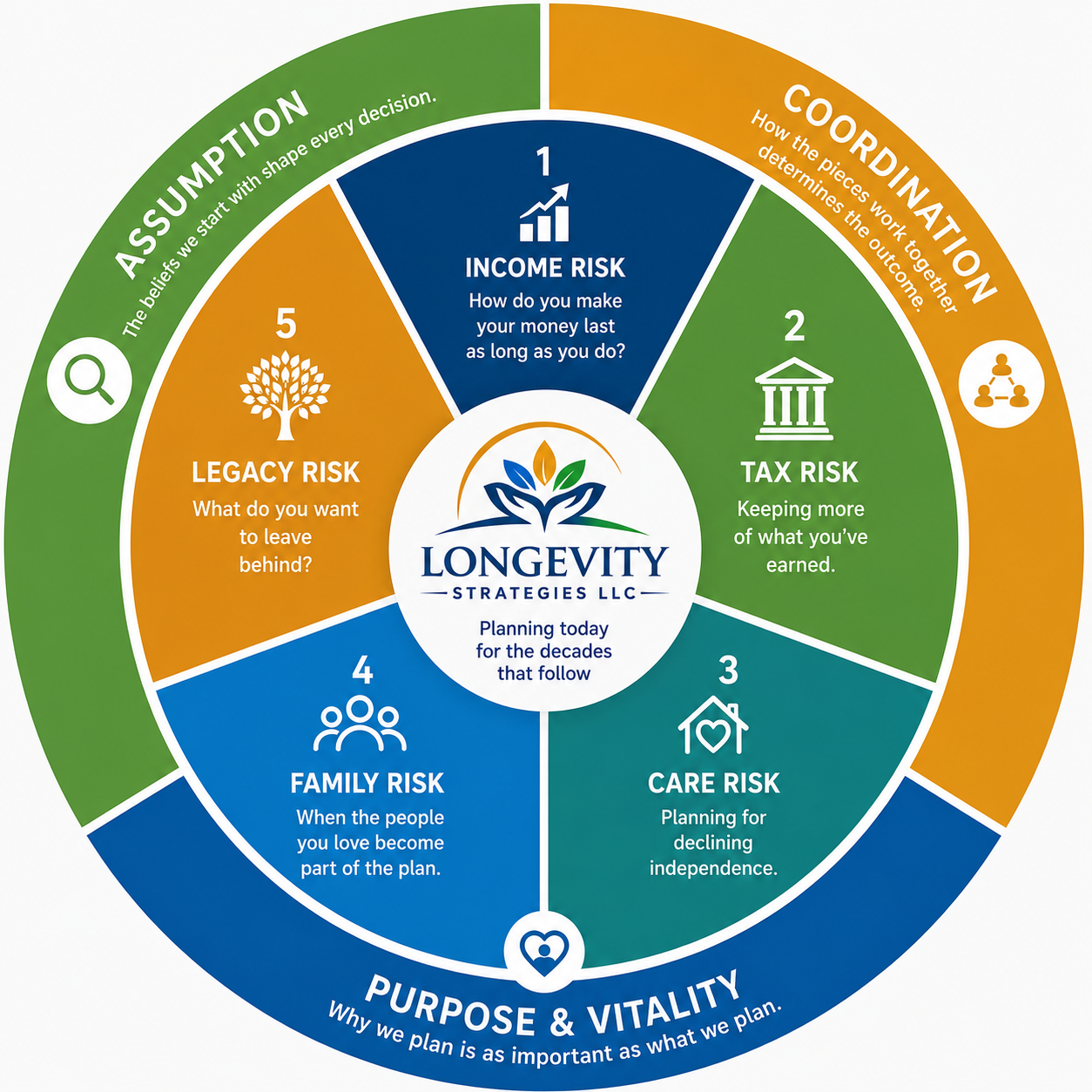
The Assessment looks at care and family planning as part of a broader long-life planning framework:
Income Security — Would care costs disrupt your income plan?
Tax Efficiency — Are care, income, and estate decisions being considered together?
Care Planning — How would care be paid for, coordinated, and delivered?
Family & Support Preparedness — Do the right people know their roles and have authority to act?
Legacy Preservation — Would care decisions, estate documents, beneficiaries, and family expectations work together?
The Assessment does not produce recommendations. It produces a preliminary score, identifies possible planning gaps, and helps decide whether a paid Longevity Risk Audit or Longevity Blueprint may be useful.

This Page Is For You If
This page may be especially relevant if you are:
worried about future care costs;
helping an aging parent;
concerned about becoming a burden to children or family;
unsure who would make decisions if you could not;
part of a blended family;
single, widowed, divorced, child-free, or without a traditional family safety net;
relying on adult children who live far away;
concerned about sibling conflict or unequal caregiving burden;
unsure whether powers of attorney, healthcare proxies, and beneficiary forms are current;
trying to coordinate care planning with income, taxes, housing, insurance, and legacy.

Common Questions
Do I need a care plan if I am healthy now?
Yes. The best time to discuss care preferences, funding, decision-makers, and family roles is before a crisis.
Is care planning only about insurance?
No. Insurance may be one possible tool, but care planning is broader and our process does not recommend or even mention specific solutions or financial products. It includes general consideration of funding alongside legal authority, housing, transportation, family communication, decision-making, and support systems.
What if I do not have children nearby?
That makes planning more important, not less. A plan can identify trusted people, backup decision-makers, professional support, document access, and care coordination options.
What if my children disagree?
That is exactly the kind of issue planning should address early. Clear authority, communication, written guidance, and professional coordination can reduce confusion and resentment.
Is this legal or medical advice?
No. The free Assessment is educational and preliminary, and does not recommend or even mention specific solutions or financial products. Legal, tax, and medical issues should be addressed with the appropriate professionals.

null
The Next Step
Care planning should not be driven by fear. It is about choice.
Before you decide what kind of plan you need, start by identifying where the risks may be: care funding, legal authority, family burden, housing, independence, documents, or coordination.
The Longevity Readiness Self-Check is a short educational tool that helps you consider whether your care and family plan is ready for a longer life.
Start with the Self-Check. If your answers suggest that a guided review may be useful, the next step is a brief Fit & Readiness Call.
The Longevity Readiness Self-Check and Longevity Readiness Assessment™ are educational and preliminary. They are not financial plans, investment recommendations, tax opinions, legal opinions, insurance recommendations, health recommendations, or legal advice. Any recommendations require a separate engagement and review of complete information.